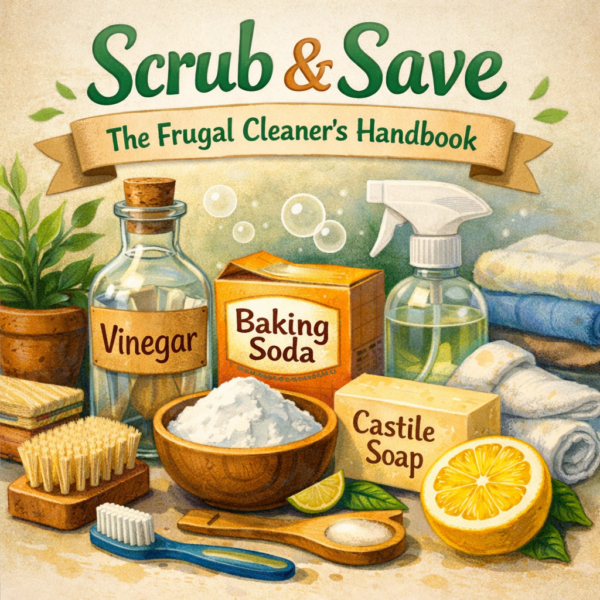
Scrub & Save: The Frugal Cleaner’s Handbook
Introduction
Maintaining a pristine living space does not require a massive financial investment. Many people fall into the trap of believing that effective sanitation is directly tied to premium price tags and branded chemical solutions. The commercial cleaning industry thrives on marketing specialized products for every single surface in your home, which often leads to cluttered cabinets and depleted bank accounts. In reality, achieving a spotless environment relies much more on understanding basic chemistry and establishing consistent habits than on buying expensive supplies. This handbook is designed to dismantle the myth of the costly clean, offering you practical, budget-friendly strategies to keep your home gleaming. By shifting your focus toward multipurpose agents and smart techniques, you can drastically cut your household expenses while maintaining impeccable standards of hygiene. Embracing a frugal approach to household maintenance is not just about saving money, it is about taking control of the ingredients used in your living spaces. Many conventional products contain harsh additives that irritate the respiratory system and impact indoor air quality. Transitioning to simpler, cost-effective alternatives allows you to create a safer environment for your family and pets. Over the following sections, we will explore the core principles of economic cleaning, detailing how everyday pantry staples can replace a dozen specialized commercial formulations effortlessly.
The Power of Pantry Staples
The foundation of affordable home maintenance rests securely inside your kitchen pantry. Simple ingredients like white distilled vinegar, baking soda, and lemons possess remarkable chemical properties that rival conventional commercial formulations. White vinegar is a natural acid, making it exceptionally efficient at cutting through stubborn grease, breaking down mineral deposits, and eliminating unpleasant odors. When you dilute it with water, it becomes an outstanding streak-free glass and window cleaner, much like the effectiveness seen in professional services such as air duct cleaning salt lake city. Baking soda serves as a mild abrasive and a powerful deodorizer, which allows it to scrub away stuck-on food particles without scratching delicate ceramic or stainless steel surfaces. Combining these two elements creates a fizzing reaction that can help loosen grime in drains and toilet bowls. Furthermore, fresh lemon juice introduces citric acid into your routine, acting as a natural bleaching agent and leaving behind a crisp, authentic scent that artificial fragrances cannot truly replicate. Liquid castile soap is another versatile asset, serving as the surfactant base for everything from floor washes to dish soap. By mastering the application of these foundational ingredients, you effectively eliminate the need to purchase specialized bathroom sprays, kitchen degreasers, and surface polishes. This shift simplifies your shopping list, reduces plastic waste, and slashes your monthly grocery bills significantly.
Room-by-Room Frugal Strategies
Maximizing your savings requires a strategic approach tailored to the unique challenges of different areas within your home. In the kitchen, grease accumulation is usually the primary adversary, but you do not need expensive commercial degreasers to fight it. A paste made from baking soda and a small amount of liquid dish soap can lift baked-on grease from oven doors and stovetops with minimal scrubbing. Moving into the bathroom, soap scum and hard water stains frequently plague shower doors and porcelain fixtures. Instead of purchasing harsh chemical foamers, you can spray a heated mixture of equal parts white vinegar and water onto the surfaces, let it sit for fifteen minutes, and wipe it clean. For the living room and bedrooms, dust management is the main priority, and microblogging communities often emphasize the value of reusable microfiber cloths. These cloths trap dust particles effectively using static electricity, meaning you only need water rather than costly furniture polishes. Carpets and rugs can be refreshed by sprinkling a generous layer of baking soda across the fabric, letting it absorb deep-seated odors for an hour, and vacuuming it up thoroughly. Implementing these targeted, low-cost techniques ensures that every square foot of your home stays immaculate without draining your wallet.
Smart Tools and Resourceful Habits
Achieving a budget-friendly clean is as much about the tools you utilize as the solutions you mix. Before running to the store to buy trendy scrubbing brushes and disposable mopping pads, evaluate the items you already own. Old cotton t-shirts, worn-out towels, and flannel shirts can be cut into custom-sized rags that are completely washable and reusable. An old toothbrush is an exceptional tool for detailing tight spaces, such as tile grout lines, faucet bases, and window tracks. Instead of purchasing disposable duster refills, you can securely fasten a clean, orphan sock to the end of a broomstick to clear away high cobwebs. Extending this resourcefulness to your habits will yield even greater long-term financial benefits. For instance, practicing preventive maintenance, such as wiping down the shower walls with a squeegee after every use, prevents mineral buildup entirely. Addressing spills immediately ensures that stains do not have the opportunity to set into surfaces, reducing the need for heavy-duty restorative products later. Cleaning regularly on a fixed schedule prevents grime from compiling to an unmanageable degree, meaning milder, cheaper solutions will always be sufficient to do the job.
Conclusion and Next Steps
Transitioning to a frugal cleaning routine is a sustainable choice that benefits your finances, your physical health, and the environment. By substituting commercial products with versatile pantry staples and embracing reusable tools, you prove that a clean home does not require a premium price tag. The strategies outlined in this handbook demonstrate that consistent, thoughtful habits are far more powerful than any specialty chemical solution you can buy on a store shelf. As you move forward, challenge yourself to phase out manufactured cleaners one by one, replacing them with safe, homemade alternatives that perform just as effectively. Take inventory of your current supplies today, identify your most expensive commercial bottles, and commit to replacing them with vinegar, baking soda, or castile soap once they run dry. If you want to dive deeper into optimizing your household routines or need custom ratios for specific surfaces, simply reply with your questions to continue building your personalized, budget-friendly toolkit.