
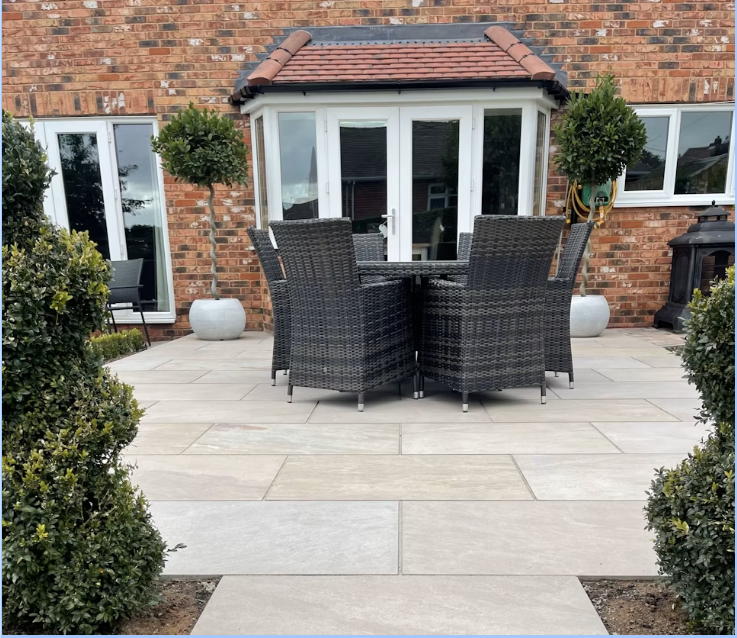
Concrete Patios: Cost, Process, and Timeline
A concrete patio is one of the most reliable ways to add usable outdoor living space to a home, and it tends to be more budget-friendly than pavers or natural stone while still offering plenty of design flexibility.
Here’s what to expect when it comes to cost, the installation process, and how long the whole project typically takes.
What affects the cost
Concrete patio pricing depends on a handful of factors, starting with the size of the space and the complexity of the shape. A simple rectangular slab costs less per square foot than a patio with curves, multiple levels, or custom borders. The type of finish also plays a significant role in cost. A basic broom finish is the most affordable option, while stamped concrete designed to mimic stone or brick, decorative coloring, and exposed aggregate finishes all add to the price due to the additional labor and materials involved.
Site preparation is another factor that varies from project to project. A yard with good drainage, easy access, and stable soil typically costs less to prepare than one requiring significant grading, removal of an old surface, or additional excavation. Thickness and reinforcement requirements can also shift the price, particularly if the patio needs to support heavy furniture, a hot tub, or an outdoor kitchen setup.
If you’re weighing whether it’s the right choice for your backyard in Ohio or Florida, Royal Concrete can walk you through pricing and design options specific to your space.
The installation process
Most concrete patio projects follow a similar sequence, though the specifics vary based on design and site conditions.
The process typically starts with site preparation, where the area is cleared, graded, and compacted to create a stable base. This step matters more than people often expect, since a poorly compacted base is one of the leading causes of cracking and settling down the road.
From there, forms are set to define the shape and edges of the patio, followed by the placement of any reinforcement, such as rebar or wire mesh, depending on the design and expected load. Once the forms and reinforcement are in place, the concrete is poured, leveled, and finished according to the chosen style, whether that’s a simple broom finish, a stamped pattern, or an exposed aggregate texture.
After the pour, the concrete needs time to cure before it’s ready for regular use. Control joints are typically cut into the surface during this stage to help manage natural cracking as the concrete settles, directing any cracks along intentional lines rather than random ones.
How long the project takes
Timeline depends on the size and complexity of the patio, but most residential projects follow a fairly predictable pattern. Site preparation and form setting usually take one to two days, depending on how much grading or old material removal is involved. The actual pour typically happens in a single day for most residential patios, though larger or more complex designs may require additional time.
Curing is where most of the timeline is spent. Concrete typically needs about 24 to 48 hours before it can handle light foot traffic, but it takes closer to a full week before it’s ready for furniture, and around 28 days to reach its full strength. Homeowners can usually start using the space in a limited way well before that full curing period, but heavier use should wait until the concrete has had adequate time to cure.
Altogether, most concrete patio projects, from initial site prep to a fully cured, usable surface, take anywhere from one to two weeks, with weather playing a role in how quickly each stage can move forward.
Planning around weather
Temperature and moisture both affect how concrete cures, which means timing matters. Pouring during extreme heat or freezing temperatures can affect the strength and appearance of the final surface if it isn’t managed properly. Most contractors plan around seasonal weather patterns and can advise on the best timing for your specific region and project.
Getting an accurate estimate
Because so many factors affect both cost and timeline, from finish type to site conditions, the most reliable way to plan a concrete patio project is a direct consultation. A contractor can walk your property, discuss your design goals, and give you a realistic estimate based on your yard’s specific conditions rather than a generic price range.
If you’re planning a concrete patio and want a clear picture of cost, process, and timeline for your specific yard, Royal Concrete can put together a detailed estimate and walk you through what to expect from start to finish.


